
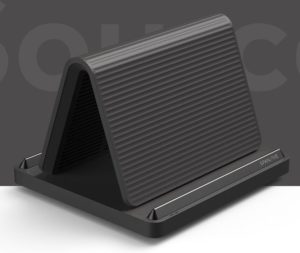
In ruling NY N305648, Customs and Border Protection (CBP) determined the classification of a wireless charging station from China. It is described as an inductive charging device for cell phones measuring 18.5 cm x 17 cm x 13.5 cm. The item, the Spansive Source Wireless Phone Charger, converts mains voltage to an inductive charging field, and consists of a charging base having two USB charging ports, a status indicator, a Wi-Fi button, and two charging stands where users place their personal electronics to receive a wireless charge. CBP notes that the Wi-Fi button allows the Source to receive program updates and does not provide any external data communication to other devices or networks.
 CBP determined that the applicable subheading for the Spansive Source Wireless Phone Charger will be 8504.40.8500, HTSUS, which provides for “Electric transformers, static converters (for example rectifiers) and inductors; parts thereof: Static converters: For telecommunication apparatus.” The general rate of duty will be Free.
Products of China classified under subheading 8504.40.8500, HTSUS, unless specifically excluded, are subject to the additional List 3 25% ad valorem rate of duty. At the time of importation, the Chapter 99 subheading, 9903.88.03, in addition to subheading 8504.40.8500 must be reported.