On January 13, the U.S. Department of the Treasury’s Office of Foreign Assets Control (OFAC) designated “two organizations, along with their leaders and subsidiaries, controlled by the Supreme Leader of Iran, the Execution of Imam Khomeini’s Order (EIKO), and Astan Quds Razavi (AQR).”

Although both purported to be charitable organizations (bonyads), Treasury states, “EIKO and AQR control large swaths of the Iranian economy, including assets expropriated from political dissidents and religious minorities, to the benefit of Supreme Leader Ali Khamenei and senior Iranian government officials. Alongside the previously designated Bonyad Mostazafan, itself controlled by the Supreme Leader, and the IRGC-owned Khatam al-Anbiya, AQR and EIKO are said to control more than half of the Iranian economy.”  The designation targeted EIKO and AQR as well as a number of their affiliates.

These persons are being designated pursuant to Executive Order (E.O.) 13876, which targets the Supreme Leader of the Islamic Republic of Iran and the Iranian Supreme Leader’s Office (SLO), as well as their affiliates.  EIKO was previously designated in November 2018 pursuant to the U.S. re-imposition of Iran-related sanctions resulting from its withdrawal from the JCPOA.
 

On January 13, 2020, U.S. Customs and Border Protection (CBP) issued a Withhold Release Order (WRO) for cotton and tomato products from Xinjiang, an autonomous territory in northwest China. This is the fourth WRO that CBP has issued since the beginning of Fiscal Year 2021, and the second on products originating in Xinjiang. Eight of the 13 WRO that CBP issued in Fiscal Year 2020 were on goods made by forced labor in China.

Notably, while previous actions have targeted specific items and firms originating from and having a presence in Xinjiang, this is the first WRO to target entire product types. Compliance concerns raised by the apparel industry have been met with guidance from CBP.

 The Agency’s Press Release included 6 out of the 11 possible forced labor indicators:

  • Debt bondage
  • Restriction of movement
  • Isolation
  • Intimidation and threats
  • Withholding of wages
  • Abusive living and working conditions

Additional forced labor indicators include: Abuse of vulnerability, deception, physical and sexual violence, intimidation and threats, and excessive overtime.

WROs are issued by the U.S. government when information reasonably but not conclusively indicates goods were made in whole or in part using Forced Labor. Merchandise detained under a WRO order must be exported immediately or a substantial submission made that provides specific information showing that the goods were not made with forced labor. To obtain a release of any shipment that has been subjected to a WRO, a certificate of origin along with this detailed statement regarding the merchandise’s production and supply chain origin must be submitted to CBP. CBP makes a determination on a case-by-case basis.

The Press Release is available here

The order is the latest U.S. action addressing rising global concerns over reports of forced labor in Xinjiang. For more information on actions addressing human rights and forced labor abuses, please see our January 12 post or contact John Brew, Jeffrey Snyder, Frances Hadfield, or Clayton Kaier.


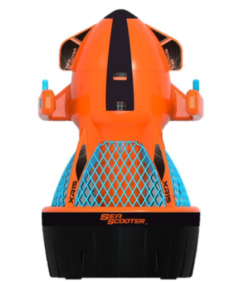
In ruling NY N316505 (Jan. 4, 2021), Customs and Border Protection (CBP) discussed the classification of the “Sea Scooter,” a children’s pool toy capable of pulling/propelling the rider at a safe speed of 2 miles per hour and at a safe maximum depth of 10 feet underwater. As stated in the ruling, the item, powered by a 12V rechargeable battery, contains a shrouded propeller housing and equipped with two handles for the user to hold onto, each containing a handle-mounted push button control to activate the propellers.

Although it contains a camera mount, a camera is not included. The ruling states that the “Sea Scooter” is principally designed for the entertainment of children ages 8 years and older and the marketing and advertisement literature depict young children.

CBP determined that the applicable subheading for the “Sea Scooter” is 9503.00.0073, HTSUS, which provides for “Tricycles, scooters, pedal cars and similar wheeled toys…dolls, other toys…puzzles of all kinds; parts and accessories thereof… ‘Children’s products’ as defined in 15 U.S.C. § 2052: Other: Labeled or determined by importer as intended for use by persons: 3 to 12 years of age.”  The rate of duty is Free.

On January 12, 2021, the United Kingdom’s Foreign Secretary, as well as Canada’s Minister of Foreign Affairs and Minister of Small Business, Export Promotion, and International Trade, made parallel announcements outlining new measures to combat forced labor and human rights violations. The announcements come in the context of rising global concerns over reports of forced labor in Xinjiang, an autonomous territory in northwest China.

The United Kingdom’s measures to combat forced labor include: 

  • A review of export controls as they apply to Xinjiang. The review will determine which additional products will be subject to export controls in the future.
  • The introduction of financial penalties for organizations, with revenue of at least 36 million pounds ($49 million), who fail to meet their statutory obligations to publish annual modern slavery statements, under the Modern Slavery Act.
  • Detailed guidance to UK business setting out the specific risks faced by companies with links to Xinjiang and underlining the challenges of effective due diligence there.
  • Guidance and support for all UK public bodies to use public procurement rules to exclude suppliers where there is sufficient evidence of human rights violations in supply chains. Compliance will be mandatory for central government, non-departmental bodies, and executive agencies.
  • A Minister led campaign of business engagement to reinforce the need for UK businesses to take action to address the risk.

Canada’s measures to combat forced labor include:

  • The Prohibition of imports of goods produced wholly or in part by forced labor as prescribed under the Customs Tariff Act.
  • Requiring Canadian companies that are 1) sourcing directly or indirectly from Xinjiang or from entities relying on Uyghur labor, 2) established in Xinjiang, or 3) seeking to engage in the market, to sign an Integrity Declaration on Doing Business with Xinjiang Entities prior to receiving services and support from the Trade Commissioner Service (TCS)A Business Advisory on Xinjiang-related entities.
  • Enhanced advice to Canadian businesses (See Global Affairs Canada business advisory).
  • Export controls including the denial of export licenses if there is a substantial risk that the export would result in a serious violation of human rights or international human rights law under the Export and Import Permit Act (EIPA).
  • Increasing awareness for Responsible Business Conduct linked to Xinjiang.
  • A Study on forced labor and supply chain risks.

The announced measures continue a global trend of new policies targeting forced labor and human rights abuses.

The Press Releases are available here:

UK Press Release

Canadian Press Release

For more information on the United Kingdom and Canada’s announcements, as well as similar actions under the U.S. Magnitsky Act, please contact Michelle Linderman or Dj Wolff.

On January 5, 2021, President Trump issued an Executive Order prohibiting transactions “with persons that develop or control” eight “Chinese connected software applications”, including Alipay, CamScanner, QQ Wallet, SHAREit, Tencent QQ, VMate, WeChat Pay, and WPS Office (the “order” or the “EO”). The prohibitions, which also apply to subsidiaries of the software developers, would go into effect 45 days from the date of the order, February 19, at the earliest. The order directs the Secretary of Commerce to identify the transactions and targets of the prohibitions not earlier than 45 days after the date of the order. Notably, these dates will fall in the Biden Administration, and it’s unclear whether the new Administration will elect to implement the order, extend the date of implementation, or revoke the order entirely. There are no current restrictions on dealing with the listed applications or their developers or owners.

A provision in the order suggests that additional software applications may become subject to the prohibitions as the order directs the Commerce Secretary “to continue to evaluate Chinese connected software applications that may pose an unacceptable risk to the national security, foreign policy, or economy of the United States, and to take appropriate action . . . ”. The order defines “connected software application” to mean “software, a software program, or group of software programs, designed to be used by an end user on an end-point computing device and designed to collect, process, or transmit data via the Internet as an integral part of its functionality.”

Further, the order directs the Commerce Secretary, in consultation with the Attorney General and the Director of National Intelligence, to provide a report to the Assistant to the President for National Security Affairs with recommendations to prevent the sale or transfer of United States user data to, or access of such data by, foreign adversaries, including through the establishment of regulations and policies to identify, control, and license the export of such data. This report is to be provided no later than 45 days from the date of the order, so could be completed prior to conclusion of the Trump Administration.

The order, which is strikingly similar to the executive orders issued last August prohibiting transactions with the Chinese-owned parent companies of the mobile applications WeChat and TikTok, cites the same national emergency first set forth in Executive Order 13873 (Securing the Information and Communications Technology and Services Supply Chain). Specifically, the order describes the threat posed by the use of these apps: the collection of sensitive personally identifiable information (PII) made accessible to the government of the People’s Republic of China (PRC) and the Chinese Communist Party (CCP). According to the order, the concern – similar to that set forth in the WeChat and TikTok executive orders – extends beyond the ability of the apps to track Federal employees and contractors to the millions of users in the United States, whose use of the apps “would allow the PRC and CCP access to Americans’ personal and proprietary information.”

The order also cites the PRC’s and CCP’s “intent to use bulk data collection to advance China’s economic and national security agenda”, as demonstrated through the 2014 cyber intrusions of the Office of Personnel Management, the 2015 breach of the health insurance company Anthem, and the Department of Justice’s indictment of members of the Chinese military for the 2017 Equifax cyber intrusion.

The Commerce Secretary, in consultation with the Secretary of the Treasury and the Attorney General, shall adopt rules and regulations necessary to implement the order under the International Emergency Economic Powers Act (IEEPA).

Commentary

Depending on how the EO is interpreted and implemented, it could, based on the language of the order itself, apply domestically and extraterritorially to prohibit any person from using these software applications while in the United States and prohibit the use of the applications by U.S. persons outside the United States. Similar to the WeChat and TikTok orders, this order leaves ambiguity as to its scope, and its remains for the Commerce Secretary to define the “transactions” subject to the prohibitions and the persons to which it applies. For example, as was an initial question upon the issuance of the WeChat order, Tencent has ownership stakes in several U.S. companies other than Tencent QQ, especially in the video gaming industry. Accordingly, using the EO as grounds for prohibiting transactions with other companies or apps backed by Tencent could have far-reaching effects.

Also of note is the provision requiring a report with recommendations to prevent the sale or transfer of United States user data to, or access of such data by, foreign adversaries. This provision could be used as the basis for an entirely different set of policies and regulations designed to halt the transfer of U.S. person user data, whether done intentionally through a sale, business transfer, or as a result of inadequate safeguards (while “personally identifiable information” is defined in the order, “user data” is not). The term “foreign adversaries” is not defined in the EO, and the report could therefore touch broader group of nations than the China-specific elements of the current order.  Given that almost every consumer facing business today collects personal data and accumulates that data rather readily, such regulations could disrupt existing business models that include the sale or transfer of user data or require more stringent security protocols.

Despite the litigation that has resulted in court orders preliminarily enjoining the WeChat and TikTok bans from taking effect, this order largely mirrors those August 2020 executive orders, and perhaps answers the lingering question of whether those orders would serve as a template for future ones targeting additional Chinese software applications. Concerns over the collection of sensitive information and subsequent access by the PRC government has also been part of the rhetoric surrounding the Clean Network program, which includes in its five lines of effort the goal of removing trusted apps from untrusted PRC smartphones and their app stores.

This order is the latest in a series of actions that have targeted Chinese-owned companies over the past several months. This includes, but is not limited to: (1) an Executive Order issued in November 2020 that prohibits certain investments in designated Chinese companies with military ties; (2) expanded export controls (e.g., Entity List designations) of several of the entities on the list; (3) the Clean Network initiative’s targeting of Huawei; (4) recent restrictions by the Federal Communications Commission (FCC) that prohibit the use of universal service funds to purchase Huawei and ZTE equipment; (5) additional action by the FCC regarding several Chinese-owned telecoms, including China Mobile and China Telecom, both of which were named as Communist Chinese military companies by the Department of Defense and subject to Executive Order 13959; (6) a set of executive orders in August that targeted the mobile applications TikTok and WeChat (the Department of Commerce’s implementing rules have been temporarily enjoined by court order); and (7) the Committee on Foreign Investment in the United States’ (CFIUS) rejection of several transactions involving Chinese-owned companies as part of a stricter approach towards Chinese investment in the United States.

U.S. businesses, persons and institutions potentially affected by the new EO should, at a minimum, assess the degree to which their current or planned operations may be affected by the order, monitor developments and where appropriate provide input to the Executive Branch about further definition, implementation and impact of the order.

This week the U.S. Treasury Department’s Office of Foreign Assets Control (OFAC) published three Frequently Asked Questions (FAQ) related to Executive Order (E.O.) 13959, “Addressing the Threat from Securities Investments that Finance Communist Chinese Military Companies.”

  • Can U.S. persons custody, offer for sale, serve as a transfer agent, and trade in covered securities?

For purposes of E.O. 13959, activity by U.S. persons related to the following services are considered permissible, to the extent that such support services are not provided to U.S. persons in connection with prohibited transactions:  clearing, execution, settlement, custody, transfer agency, back-end services, as well as other such support services.

  • Does the prohibition in E.O. 13959 apply to transactions in securities of a Communist Chinese military company subsidiary with a name that exactly or closely matches the name of an entity identified in the Annex to E.O. 13959?

Yes.  As stated in FAQ 858, the prohibitions of E.O. 13959 apply with respect to “publicly traded securities (or any publicly traded securities that are derivative of, or are designed to provide investment exposure to, such securities) of an entity with a name that exactly or closely matches the name of an entity identified in the Annex to E.O. 13959 (effectively January 11, 2021).”  OFAC has published and will continue to update a list on its website to aid in the implementation of E.O. 13959, including the names of certain entities that closely match the name of entities identified in the Annex to E.O. 13959.  Among other names, OFAC’s current list includes (1) China Telecommunications Corp. / China Telecommunications; (2) China Mobile Communications Group / China Mobile Communications / China Mobile Communications Group Co Ltd; and (3) China United Network Communications Group Co Ltd / China United Network Communications Ltd.  These names closely match the names of China Telecom Corporation Limited (NYSE: CHA), China Mobile Limited (NYSE: CHL), and China Unicom (Hong Kong) Limited (NYSE: CHU).  Transactions in the securities of any Communist Chinese military company subsidiary (whether expressly listed or not) are prohibited if the subsidiary’s name exactly or closely matches the name of these or any other entities identified in the Annex to E.O. 13959 or the name of any Communist Chinese military company listed by the Departments of the Treasury or Defense.

In addition, as OFAC stated in FAQ 860, the prohibitions in section 1(a)(i) of E.O. 13959 expressly apply to “any securities that are derivative of, or are designed to provide investment exposure to” the publicly traded securities of any Communist Chinese military company, including American depository receipts (ADRs).

The prohibition in section 1(a)(i) of E.O. 13959 takes effect at 9:30 a.m. eastern time on January 11, 2021.  Compliance with this prohibition is measured by trade date, rather than settlement date.

  • May market intermediaries and other participants facilitate divestment from publicly traded securities of Communist Chinese military companies, including divestment by investment fund managers?

Yes.  Market intermediaries and other participants may engage in ancillary or intermediary activities that are necessary to effect divestiture during the relevant wind-down periods or that are otherwise not prohibited under the E.O.  Transactions by U.S. persons (including investors and intermediaries) involving investment funds that are seeking to divest during the relevant wind-down periods to ensure compliance with the E.O. are permitted.

As explained in FAQ 861, under E.O. 13959, any transaction in publicly traded securities, or any securities that are derivative of, or are designed to provide investment exposure to such securities, of any Communist Chinese military company, as defined in E.O. 13959, is prohibited regardless of such securities’ share of the underlying index fund, ETF, or derivative thereof.  FAQ 862 also notes that U.S. funds are not required to divest covered securities of companies identified in the Annex to E.O. 13959 by January 11, 2021.  Divestment must be completed by November 11, 2021.


On December 28 and 29, the U.S. Trade Representative (USTR) conducted public hearings on Vietnam’s timber imports and currency practices. Participant lists and hearing transcripts are available below. Post-hearing rebuttal comments are due January 6 and 7.

More information on the initiation of the investigations and hearings is available in our October and November posts.

Hearing Schedules:

Date Event
December 10 Due date for filing requests to appear and a summary of expected testimony at both public hearings
December 28 Public Hearing on Vietnam’s Timber Imports

December 29 Public Hearing on Vietnam’s Currency Practices

January 6 Due date for submission of timber post-hearing rebuttal comments (post-hearing rebuttal comments are to be limited to rebutting or supplementing testimony at the hearing)
January 7 Due date for submission of currency post-hearing rebuttal comments (post-hearing rebuttal comments are to be limited to rebutting or supplementing testimony at the hearing)


In ruling NY N316065 (December 11, 2020), Customs and Border Protection (CBP) discussed the classification of portable, nonelectric charcoal or wood-fueled outdoor braziers and a grill.  As stated in the ruling, the items at issue are composed of series 6061 aluminum and 304 stainless steel.  In use, they are placed on the ground and are fully collapsible.  All of the items include a canvas carrying bag for storage and portability purposes.

As stated by CBP, the braziers and the grill are composite goods comprised of different materials that are classifiable in different headings. GRI 3(b) of the HTSUS provides, in relevant part, that composite goods, which cannot be classified by reference to GRI 3(a), shall be classified as if they consisted of the material or component, which gives them their essential character. The aluminum accounts for the vast majority of the weight and value for each of the braziers and the grill, therefore, CBP determined that the essential character of the braziers and the grill is the aluminum.

CBP determined that the applicable subheading for the aluminum braziers and the aluminum grill is 7615.10.9100, HTSUS, which provides for “Table, kitchen or other household articles and parts thereof, of aluminum: Other: Other.”  The rate of duty will be 3.1 percent ad valorem.

On December 31, 2020, U.S. Customs and Border Protection (CBP) issued a Withhold Release Order (WRO) for seafood harvested on a Taiwanese fishing vessel named the Lien Yi Hsing No. 12. The order follows a separate decision in August of last year against the Da Wang, another Taiwanese fishing vessel suspected of similar violations. The December 31 WRO was the 13th and final for Fiscal Year 2020.

The Agency’s Press Release included 3 out of the 11 possible forced labor indicators:

  • Deception
  • Withholding of wages
  • Debt bondage

Additional forced labor indicators include: Abuse of vulnerability, restriction of movement, isolation, physical and sexual violence, intimidation and threats, retention of identity documents, abusive working and living conditions, and excessive overtime.

WROs are issued by the U.S. government when information reasonably but not conclusively indicates goods were made in whole or in part using Forced Labor. Merchandise detained under a WRO order must be exported immediately or a substantial submission made that provides specific information showing that the goods were not made with forced labor. To obtain a release of any shipment that has been subjected to a WRO, a certificate of origin along with this detailed statement regarding the merchandise’s production and supply chain origin must be submitted to CBP. CBP makes a determination on a case-by-case basis.

For more information, please contact: Jeffrey Snyder, Frances Hadfield, or Clayton Kaier

On December 23, the Bureau of Industry and Security (BIS) amended the Export Administration Regulations (EAR) to remove the People’s Republic of China (PRC or China) Special Administrative Region of Hong Kong from the list of destinations in the EAR.  The amendment implements Sections 2 and 3 of Executive Order 13936 of July 14, 2020, in response to new security measures imposed on Hong Kong by the government of China.  BIS states that the “new measures [by China] fundamentally undermine Hong Kong’s autonomy increasing the risk sensitive U.S. technology and items will be diverted to unauthorized end uses and end users in China.”

On December 28, BIS amended the EAR to revise the Country Group designations for Ukraine, Mexico and Cyprus.

In this rule, BIS moved Ukraine from Country Group D to Country Group B and added Mexico and Cyprus to Country Group A:6. In both cases, these countries now have access to additional license exceptions available in the EAR.

The EAR designates countries into Country Groups A, B, D, and E which reflect each country’s export control policy, multilateral regime membership, system, and practice. The Country Groups generally serve as a basis for the availability of exceptions from license requirements of the EAR. Country Groups may also be used when describing license review policy and end-user and end-use based controls.